
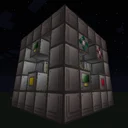
Extreme Reactors · Getting started · Beginner
Extreme Reactors Getting Started: How to Build Your First Basic Reactor
In this guide, you will learn how to construct and operate your first Basic Reactor in the Extreme Reactors mod, scaling from a starter 3x3x3 cube up to an efficient 5x5x5 cooled generator. Mastering this multiblock machine provides a massive, reliable supply of Forge Energy (FE) early on, eliminating power bottlenecks as you transition away from basic coal generators.
What you need
- Yellorite Ore (or Uranium Ore, depending on your modpack's ore dictionary settings)
- A large supply of Iron Ingots and Coal or Charcoal
- Redstone Dust and Gold Ingots (for controllers and power taps)
- A Furnace or modded Smelter (to smelt Yellorite and create Graphite Bars)
- 3x3x3 Starter Parts: 21 Basic Reactor Casings, 1 Basic Reactor Controller, 1 Basic Reactor Fuel Rod, 1 Basic Reactor Control Rod, 1 Basic Reactor Solid Access Port, 1 Basic Reactor Forge Energy Power Tap (Active)
- 5x5x5 Upgrade Parts: Approximately 70+ additional Basic Reactor Casings (or Basic Reactor Glass), 4 more Basic Reactor Control Rods, 11 more Basic Reactor Fuel Rods, and a moderator material (like Graphite Blocks, Redstone Blocks, or Water Buckets)
- Power cables or energy cells from another mod (or energy-consuming machines) to draw out the generated Forge Energy
Step by step
1Mine Yellorite and Smelt Graphite
Head underground and mine Yellorite Ore, a bright yellow-green ore found across standard mining layers. Smelt the raw ore in a furnace to obtain Yellorium Ingots, which serve as both a crafting ingredient and your reactor's primary fuel. At the same time, smelt Coal or Charcoal in a furnace to create Graphite Bars, which are essential for blocking radiation inside the reactor casing recipes.
Tip: If your modpack disables Yellorite generation in favor of unified ores, look up Yellorium in JEI; standard Uranium Ingots from other tech mods are usually interchangeable for crafting and fueling.
2Craft the Basic Reactor Components
In modern versions of Extreme Reactors, early-game generators are built using 'Basic' tier components, which have a maximum size limit of 5x5x5. Use your Iron Ingots, Graphite Bars, and Yellorium Ingots to craft a batch of Basic Reactor Casings (check JEI for exact recipes). Next, craft the five functional blocks required for any passive reactor: one Basic Reactor Controller, one Basic Reactor Fuel Rod, one Basic Reactor Control Rod, one Basic Reactor Solid Access Port, and one Basic Reactor Forge Energy Power Tap (make sure to craft the Active variant so it pushes power to cables automatically).
Tip: You can craft Basic Reactor Glass to use on the flat faces of your reactor later, allowing you to see the internal layout, though it cannot be used on the outer edges or corners.
3Build the 3x3x3 Starter Frame and Core
Find a flat area and place a 3x3 base of Basic Reactor Casings on the ground. Build up the four vertical corner pillars using two more casings each, and connect the top with a 3x3 hollow ring of casings—leaving the very center block of the top face empty. Place your single Basic Reactor Fuel Rod inside the hollow center of the cube, resting on the floor block, and place the Basic Reactor Control Rod directly on top of the Fuel Rod to plug the hole in the roof.
Tip: Every Fuel Rod column in a reactor must run continuously from the floor to the ceiling and be capped by a Control Rod on the very top face.
4Install Functional Ports to Form the Multiblock
You now need to fill in the four open 1x1 windows on the vertical walls of your 3x3x3 cube. Place the Basic Reactor Controller in the front center slot, the Basic Reactor Solid Access Port in the left center slot, the Basic Reactor Forge Energy Power Tap on the right, and a normal Basic Reactor Casing in the back. The moment the last block is placed, the textures will connect into a seamless multiblock frame, and the Controller screen will light up.
Tip: If the textures do not merge into a single unit, right-click the frame with an empty hand; the mod will display an error message in your chat box telling you exactly which coordinate has an invalid block.
5Fuel and Activate Your First Reactor
Right-click the Basic Reactor Solid Access Port and place your Yellorium Ingots into the top-left inlet slot; you will see the central Fuel Rod visually fill up with yellow fuel. Next, right-click the Basic Reactor Controller to open the main monitor interface. Click the Activate toggle button on the bottom right; the reactor will spin up, heat will begin to rise, and the internal energy buffer will rapidly fill with Forge Energy.
Tip: As Yellorium burns, it turns into Cyanite Ingots (nuclear waste) and collects in the outlet slot of your Solid Access Port. Pull this out periodically and save it, as Cyanite is used later to make advanced Blutonium fuel.
6Extract Power and Adjust the Control Rod
Attach a Forge Energy compatible power cable or place an energy-hungry machine directly against the Basic Reactor Forge Energy Power Tap to begin extracting electricity. If you are generating way more power than your base currently consumes, right-click the Basic Reactor Control Rod on the roof of the reactor. Here you can increase the insertion percentage (for example, up to 50% or 80%), which slows down the fission reaction and saves your Yellorium fuel from burning unnecessarily.
Tip: Reactors do not explode if their internal power buffer hits 100% or if they overheat, but running at full speed while the energy buffer is full will still waste your fuel.
7Expand to a 5x5x5 Casing Shell
While the 3x3x3 reactor works, it has no interior space for coolant, making it fuel-inefficient. To upgrade to the maximum Basic Reactor size, turn off the reactor, break the multiblock, and lay down a 5x5 floor of Basic Reactor Casings. Build the outer 5x5x5 structural frame (the 12 outer edges and 8 corners must be solid Basic Reactor Casings). Fill in the four vertical 3x3 wall faces using Casings or Basic Reactor Glass, remembering to embed your Controller, Solid Access Port, and Power Tap anywhere inside those vertical 3x3 wall areas.
Tip: Place a second Solid Access Port on the wall and toggle one port to 'Inlet' and the other to 'Outlet' so you can easily automate fuel insertion and Cyanite extraction using hoppers or item pipes.
8Install Multi-Rod Columns and Moderator Coolant
Look down into the empty 3x3x3 interior of your 5x5x5 shell. Build four vertical columns of Basic Reactor Fuel Rods (each column is 3 blocks tall) in a cross or checkerboard pattern—for example, place a 3-tall Fuel Rod column at the North, South, East, and West center positions around the very middle block. Fill the remaining empty spaces inside the 3x3x3 interior (especially the dead-center column between your four rods and the corner columns) with a moderator like Graphite Blocks, Redstone Blocks, or Water. Finally, close the 3x3 roof hole by placing Basic Reactor Control Rods directly above the four Fuel Rod columns, and fill the rest of the roof with Basic Reactor Casings.
Tip: Check the in-game Patchouli manual (if installed) or test different materials in the interior slots; solids like Graphite Blocks or liquids like Water dramatically increase power output while lowering core heat.
How it works
Extreme Reactors simulates nuclear fission through three interconnected mechanics: Radiation, Heat, and Moderation. When a reactor is active, fuel inside the Fuel Rods emits fast radiation packets horizontally in all directions. When fast radiation hits another Fuel Rod, it triggers extra fission, generating huge bursts of heat and burning fuel faster. However, fast radiation moves too quickly to be absorbed efficiently; it needs to pass through a 'Moderator' block—such as Graphite, Water, or Redstone—situated between the Fuel Rods to slow it down into slow radiation, which produces far more energy per unit of fuel consumed.
At the same time, the reactor must manage its Core Heat and Casing Heat. Fuel Rods produce heat inside the core, which must be transferred outward to the Reactor Casing where it is converted into Forge Energy (or steam, in advanced setups). The material you place in the empty spaces around your Fuel Rods also determines thermal conductivity—how quickly heat moves from the hot rods out to the outer casing walls.
If a reactor runs too hot (easily spotted when the temperature bars in the Controller GUI turn orange or red), its fuel penalty skyrockets, meaning you burn through Yellorium rapidly for diminishing power gains. By upgrading from a 3x3x3 (which has zero room for internal moderators or coolants) to a 5x5x5, you allow radiation to bounce between multiple Fuel Rods through Graphite or Water while keeping the core temperature in an optimal, fuel-efficient range.
Common mistakes
- Putting functional ports or glass on the outer edges: The 12 outer edges and 8 corners of any reactor must be built strictly out of solid Reactor Casings. Controllers, Ports, Taps, Glass, and Control Rods can only be placed within the inner faces of the walls or roof.
- Leaving empty air blocks inside a 5x5x5 reactor: Air is a terrible heat conductor and a terrible radiation moderator. Always fill every single interior gap around your Fuel Rods with a valid coolant block or liquid like Water, Graphite Blocks, or metal blocks.
- Mixing Basic and Reinforced reactor parts: Extreme Reactors splits blocks into 'Basic' (up to 5x5x5) and 'Reinforced' (for massive industrial builds). Mixing Basic Casings with a Reinforced Controller will prevent the multiblock from forming.
- Leaving Control Rods at 0% insertion with a full energy buffer: Unlike solar panels, a reactor continues to burn Yellorium even when its internal 10,000,000 FE buffer is completely full. Insert your Control Rods or turn the reactor off when you are not drawing power.
- Placing Control Rods on the side walls or omitting Fuel Rods beneath them: Control Rods only belong on the top horizontal face of the reactor, and every single Control Rod must have a continuous vertical line of Fuel Rods extending all the way down to the bottom floor beneath it.
FAQ
Can my Extreme Reactor overheat and explode if I build it wrong?
No. Extreme Reactors are completely safe and will never explode, melt down, or destroy your base. The only penalty for overheating is extreme fuel inefficiency, causing your Yellorium supply to drain very quickly.
Why can I not build my Basic Reactor larger than 5x5x5?
Basic Reactor parts have a hard-coded size limit of 5x5x5 (horizontal and vertical). When you are ready to build larger reactors or steam turbines, you must craft Reinforced Reactor Casings and Reinforced functional parts.
Why is my reactor not sending power into my attached cables?
Check which Power Tap you crafted. Extreme Reactors includes both 'Active' and 'Passive' Forge Energy Power Taps. You normally want the Active tap, which automatically pushes energy out into adjacent cables and machines.
What should I do with all the Cyanite Ingots piling up in the Access Port?
Do not throw them away! Cyanite is required later to craft a Reprocessor multiblock (which recycles Cyanite and Water into powerful Blutonium fuel) and is also used to construct advanced Reactor Turbines.
By progressing from a starter 3x3x3 cube to a moderated 5x5x5 Basic Reactor and tuning your Control Rods to match your base's energy draw, you now have a safe, scalable source of early-game Forge Energy.